



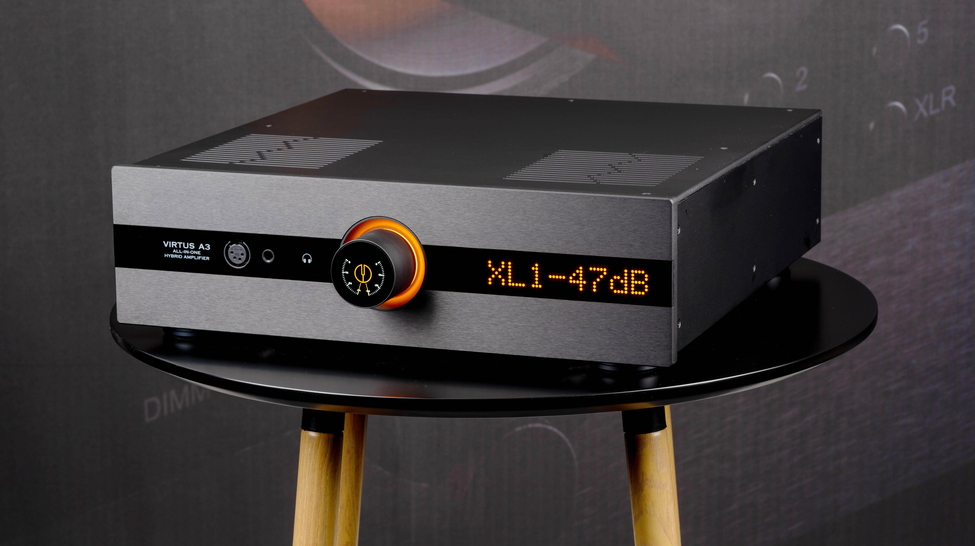
Canor Virtus A3
Miguel Marques
28 janeiro 2026
Um som quente e suave que me soou muito musical e nunca excessivo.
Criada em meados dos anos 90 do século passado, na altura com o nome Edgar, a Canor é já hoje um nome reconhecido por audiófilos de todo o mundo, tendo como imagem de marca efectuar toda a sua produção na Eslováquia (inclusive para terceiros em modo OEM, como a Musical Fidelity), não recorrendo a nenhum outsourding asiático.
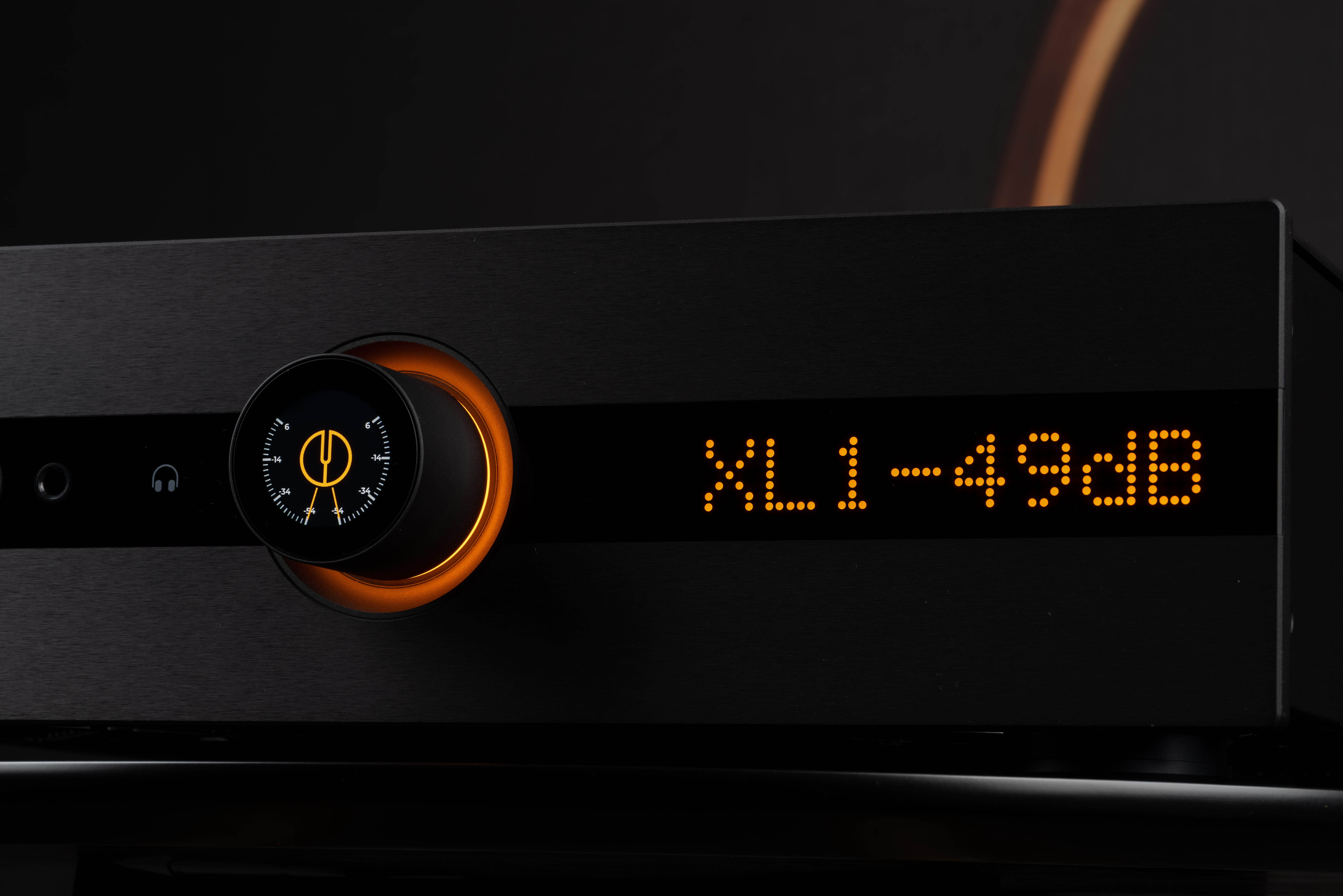
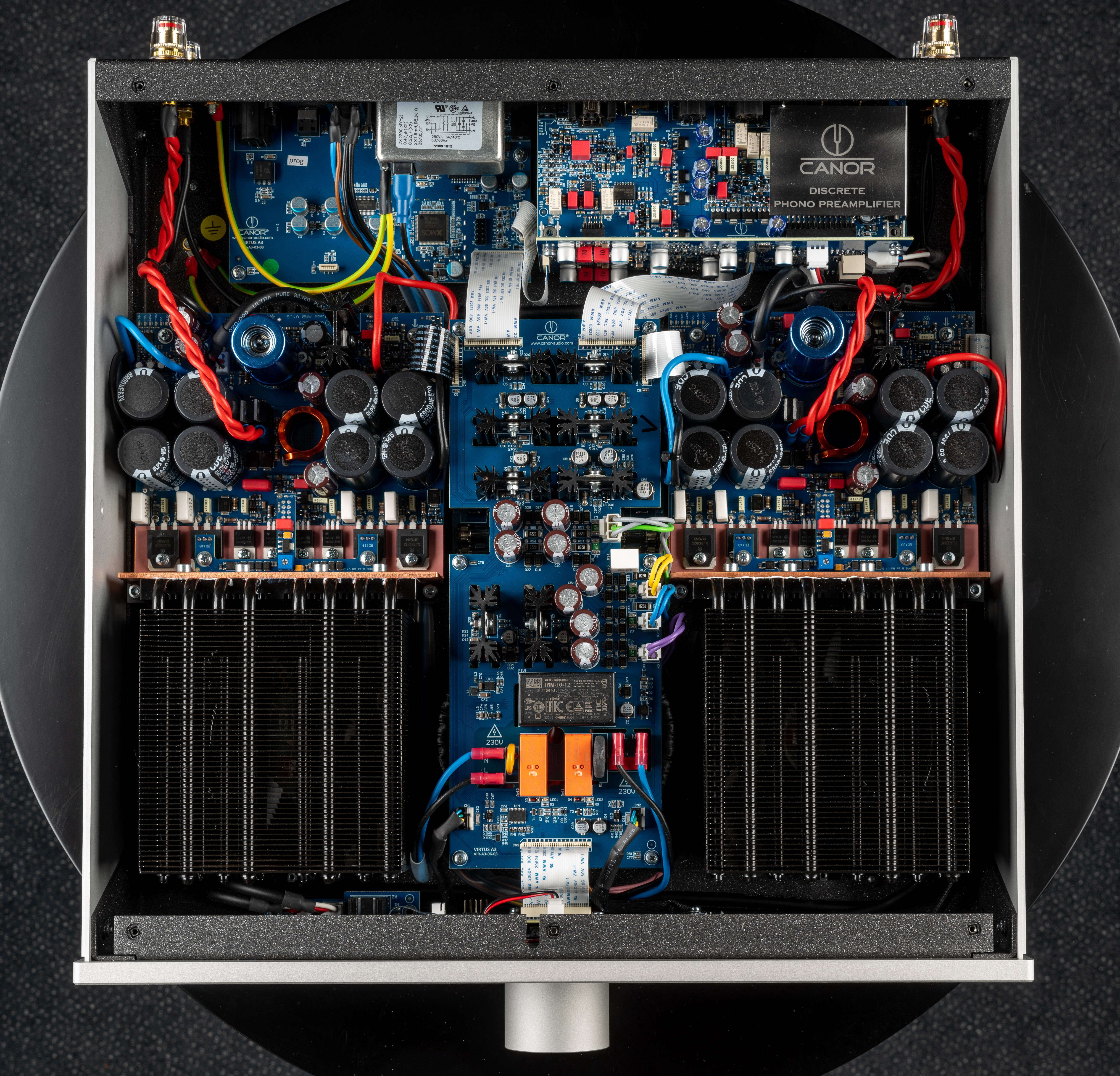
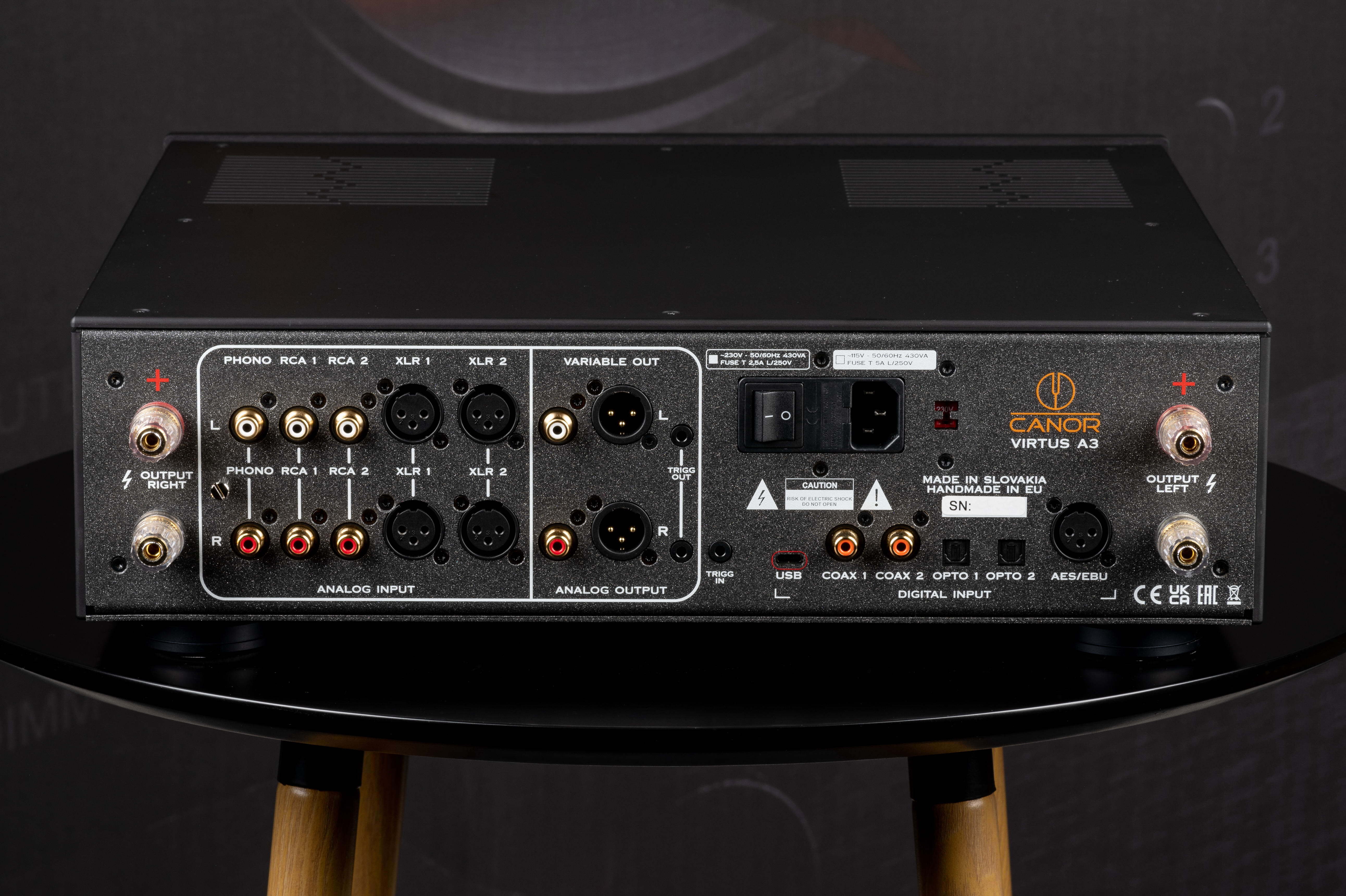
Conhecida por usar válvulas com frequência nos seus circuitos, particularmente JJ (testadas no A3 para durarem cerca de 4000 horas), também eslovacas, e recorrendo a rigorosos testes de qualidade nas mesmas antes de as colocar nos produtos, a Canor apresentou recentemente o Virtus A3 (virtude, do latim), um amplificador integrado que conta com tudo excepto streaming: entrada de fono MM e MC, saída de auscultadores, várias entradas analógicas (nomeadamente duas XLR, uma raridade que se aplaude), várias entradas digitais (USB com isolamento galvânico, como deve ser, AES/EBU, e quatro S/PDIF, duas coaxiais e duas ópticas, notando-se apenas a falta de HDMI ARC), um chip ESS para a secção digital e um amplificador integrado em formato híbrido (com umas E88CC a servirem de préamplificador inicial no amplificador de potência, que funciona sempre em Classe A), e que conta com uma topologia completamente balanceada / diferencial, duplo mono e totalmente discreta, que debita 2 x 100W a 8Ω e 2 x 150W a 4Ω. Com um design muito moderno mas simples e elegante, o A3 conta também com um inovador sistema de arrefecimento, um remoto muito pequeno, elegante e ergonómico, e um visor que mostra a entrada e o volume num tamanho de fazer inveja ao canal NOW. Temos ainda saídas de linha (XLR e RCA), que creio que raramente serão usadas num produto deste tipo, excepto para subwoofers. Para especificações, não estamos nada mal…
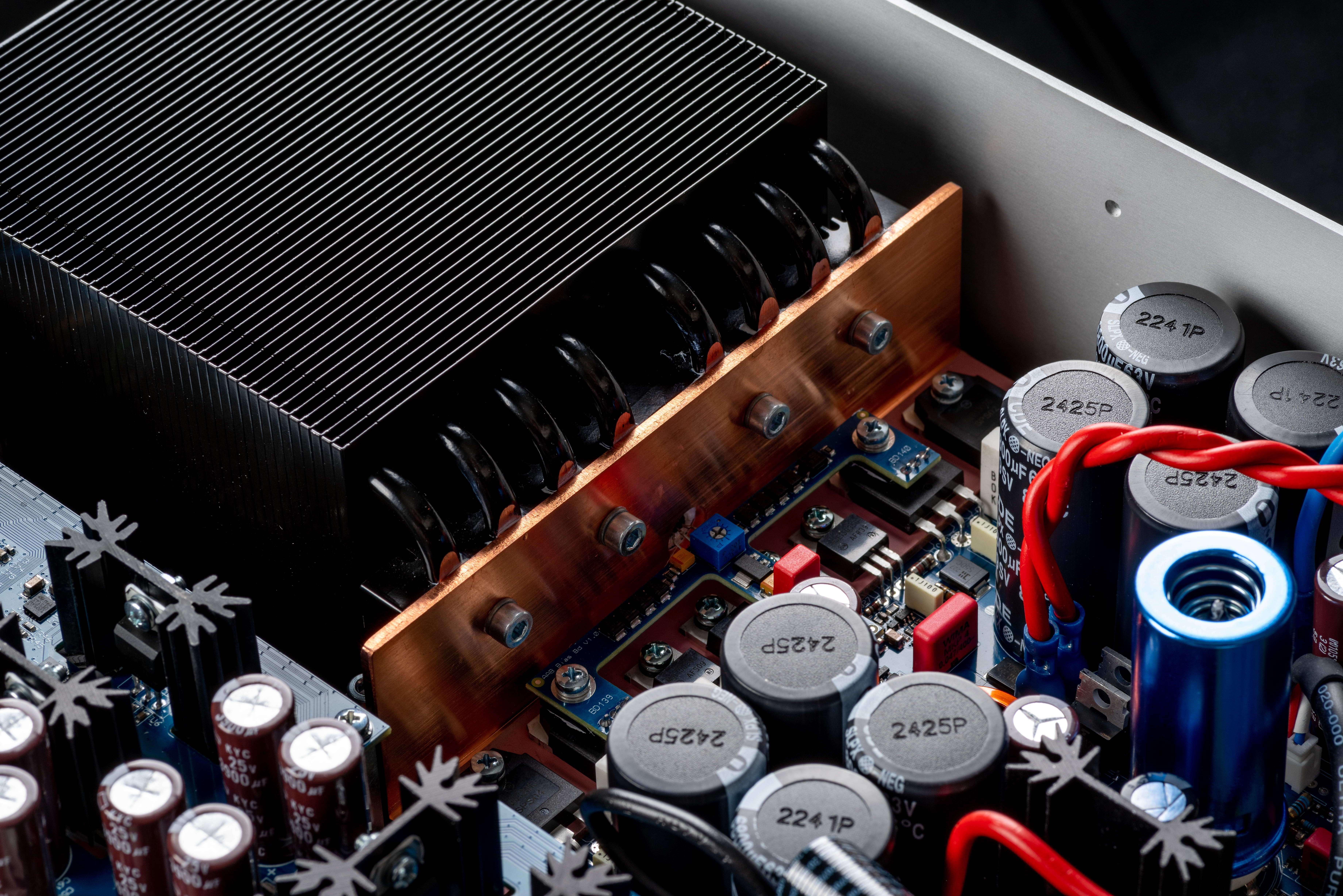
Ainda antes de avançar para o teste em si, importa discorrer um pouco mais sobre o amplificador de potência deste Canor, que conta não apenas com uma entrada a válvulas em Classe A, mas também com um circuito em Classe A/B, que funciona em modo current dumping, uma ideia «pedida emprestada» à Quad e a Peter Walker - se bem que, pelo que consegui perceber, a implementação da Canor tem alterações significativas face à da Quad dos anos 70. Caso tenha interessa em saber mais sobre esta tecnologia, é só seguir o link em baixo e ler o texto que Ivan Bosnovic, da Canor, me enviou.
”Current Dumping Technology used in the Canor Virtus A3 explained:
In Canor, we have huge admiration for the groundbreaking work done at Quad by P.J. Walker and M.P. Albinson with the ESL speakers and current dumping amplifier designs. We, however, use our own implementation of Current Dumping without the Classic Quad’s bridge circuit in the Virtus A3.
Quad’s “current dumping” is actually a misnomer; Peter Walker patented it with its proper name, which is a feedforward amplifier design formed by the passive bridge circuit with the infamous inductor replacing the more conventional resistor element in one arm of the bridge circuit to facilitate manageable power dissipation. However, it’s this inductor that is one of the topologies’ greatest practical weakness – the inductors non-zero DC resistance and non-ideal characteristics of real world inductors which unfortunately worsens with increasing frequency and power levels (even with the best quality. Air-core inductor) results in the feed forward Bridge circuit introducing distortion rather than nulling distortion as the bridge itself becomes increasingly unbalanced due to the worsening “non-ideal characteristics” of the bridge inductor. This unrealistic expectation of a “perfect” inductor and finite gain of the Class A “Reference” amplifier prevents the idealized distortion cancellation, which in reality results in the Bridge’s “unbalance error” introducing distortion beyond what can be achieved with modified topologies.
The Virtus A3 implements a very linear Class A amplifier based around a vacuum tube frontend and a combined Mosfet / Bipolar Class A power stage – this is arranged to always control the Class AB current dumping output stage – the highly linear Class A stage is always riding the output signal with the Class AB stage providing the “brute force” current. As the Current dumpers handle the high current, the Class A stage sees a benign load and thus is very linear. The sound quality is determined by the Class A stage, which is arranged so that it is always riding the output signal; it has enough power headroom to allow it to correct for any error introduced by the Current Dumping stage.
It would be more accurate to describe the Quad current dumping design as a low-power Class A design current dumped by a Class C power stage, as the conduction angle of the Current Dumpers is less than 180 degrees. The abrupt transitional loading on the Class A stage by the Class C Current dumpers as they come into conduction results in a highly nonlinear loading on the finite output impedance of the Class A stage - this results in the creation of higher order distortion products in the Class A stage. This is prevented in the A3 design as the Currant damping stage is always in conduction without abrupt Current loading transitions on the Class A stage. The Tube-based Class A amplifier stage is designed to be as simple as possible without the typically high distortion levels of tube amplifiers. Current is typically the nemesis of Tubes; however, in the Virtus A3, as the current-damping output stage isolates the Tube-based Class A stage from the heavy speaker load current allowing the Class A stage to operate very linearly without the need for high feedback levels. The tube Class A stage is powered by a discrete low noise, low impedance regulator circuit, and as the sound quality of the power amplifier stage is primarily determined by this Class A stage, we gain the performance benefit of a regulated Power amplifier PSU without the typical high- power dissipation of a regulated amplifier, including the high current output stage.
The Virtus A3 is designed as a dual mono design as much as possible, with independent Power supplies to each channel, including the power amplifier stages. Each current dumping output stage channel has its own local multi-capacitor power bank to provide a low impedance “fast” power reserve as close as possible to the output stage to allow high short-term peak currents into difficult low impedance speaker loads if required.
The Virtus A3 signal path is fully differential, with signal-ended analogue inputs being first converted to a differential signal, followed by a differential stepped attenuator used for the analogue volume control stage. The tube power amplifier input stage is fully differential, allowing a fully differential feedback loop – so that both the positive and negative speaker output signals are “Kelvin sensed” at the speaker terminals, so that the feedback loop correctly senses the Output load current/signal. We do believe that the ultimate sound quality of P.J. Walker’s design was limited by the “Component Quality Choices” and the design ethos of original Quad designs – but this should not take anything from the groundbreaking technology development at Quad. With hindsight, we believe it would be fair to call Quad during P.J. Walker’s period as one of the great bastions, if not the greatest bastion of the British Hi-Fi industry.”


Conteúdo
- Canor Virtus A3 Miguel Marques
- Página 2
Outros conteúdos
- 11 outubro 2026
Octave HP 300 SE / RE 320 - 10 outubro 2026
AVID actualiza os modelos Pellar e Pulsus - 8 outubro 2026
LG recebe galardão “BEST BRAND OF IFA 2026” - 6 outubro 2026
Novo leitor Blu-ray 4K de referência da Magnetar - 4 outubro 2026
Nova gama Diamond 800 D5, de B&W.